

What to Bring to Your First Meeting With a Commercial General Contractor
Starting a commercial construction project can feel overwhelming before the first drawing is even finished. You may have a property in mind, a business concept, or a target opening date without knowing exactly what construction will require.
You do not need every detail finalized before contacting a commercial general contractor. However, bringing the right information to your first meeting can make the conversation more productive and help identify what needs to happen next.
Whether you are planning a tenant improvement, commercial renovation, or ground-up project in Dallas-Fort Worth, here is how to prepare.
1. A Clear Description of Your Business and Project
Start with what you need the completed space to do.
An office renovation, restaurant buildout, retail store, and warehouse may have similar square footage but very different construction needs. Explain how your business will operate and which features are essential.
Be ready to discuss:
- The type of business or intended building use.
- Approximate square footage.
- Whether the project involves an existing space or a new building.
- Important rooms, work areas, storage, and equipment.
- Whether employees or customers will occupy the property during construction.
Specific operational needs are more useful than a general description such as “a modern commercial space.” For example, explaining that your business needs private consultation rooms, secure inventory storage, and a dedicated delivery entrance gives the contractor a clearer starting point.
2. The Property Address and Available Building Information
If you have selected a property, bring the address, listing information, available floor plans, and recent photographs.
For an existing space, useful documents may include previous construction drawings, information about existing building systems, and a description of the previous tenant’s use. For a ground-up project, available surveys, site plans, and civil drawings can help frame the discussion.
These materials provide background, but they do not replace a site visit or professional evaluation. Older drawings may not reflect the building’s current condition.
If you are still comparing properties, say so. The first meeting can help identify questions to investigate before moving forward with a particular location.
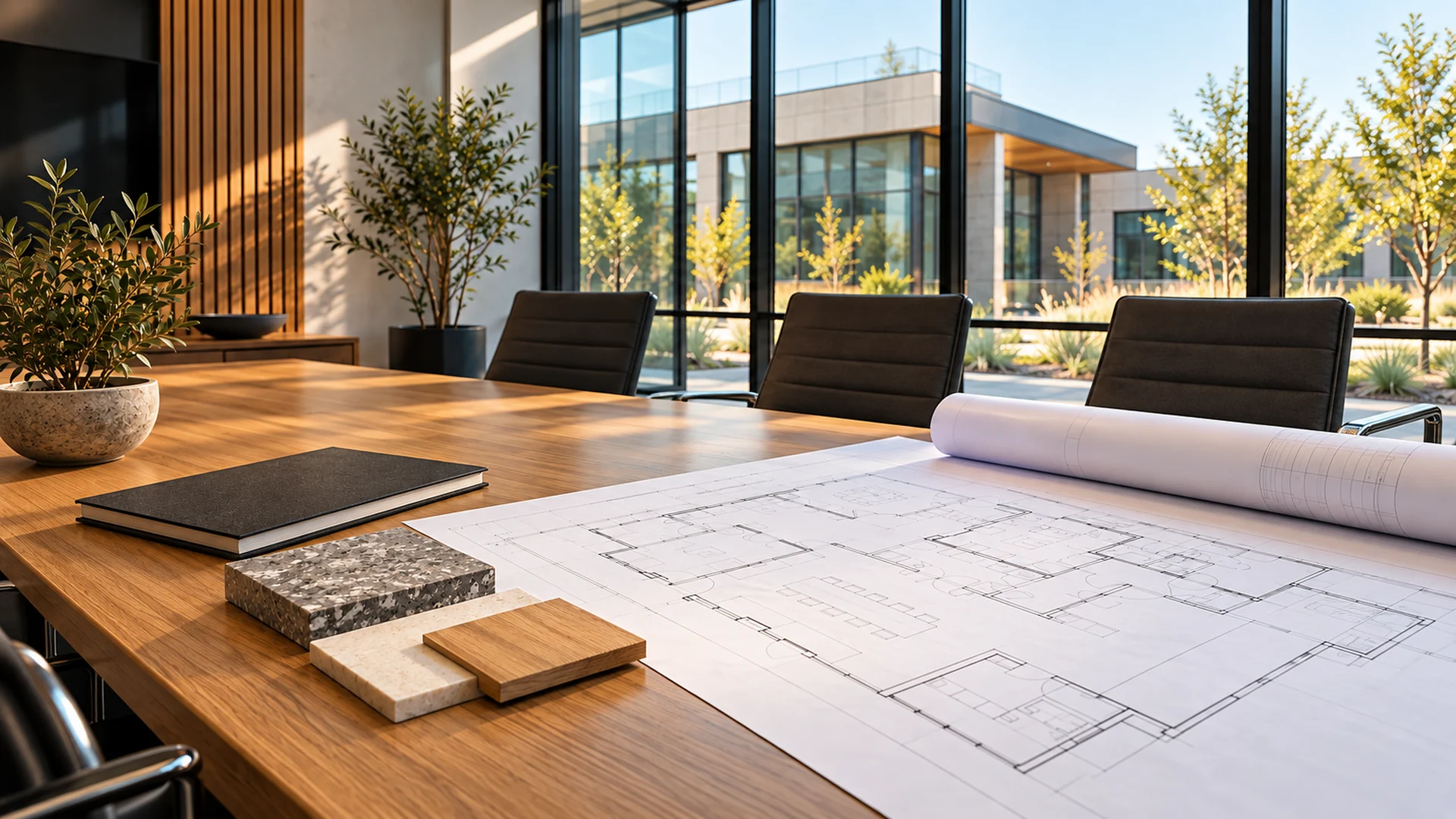
3. Any Plans, Sketches, or Design References
Bring the most current version of whatever design information you have. That might be a complete architectural set, a preliminary layout, a franchise design package, or a simple sketch.
Clearly identify which documents are approved, which are preliminary, and which are only inspiration.
Reference photos can help explain the appearance you want, but they do not define a complete construction scope. A photo of a finished reception area, for example, may communicate your preferred style without showing its materials, dimensions, lighting requirements, or installation details.
It also helps to separate essential features from preferences. That gives the project team a better basis for discussing options as the design develops.
4. A Budget Range and What It Includes
A useful budget conversation starts with more than a single number.
Explain whether your budget covers construction only or the entire project. Depending on your plans, the overall investment may also need to account for design services, equipment, furniture, technology, signage, moving expenses, and other costs.
Clarify which items you expect the contractor to provide and which you plan to purchase separately.
If you have not established a budget, be direct about that. An early discussion can help define the information needed to develop one. Preliminary pricing should also identify its assumptions and unresolved items so you understand what could change.
The goal of the first meeting is to establish a realistic starting point, not force a firm price from an incomplete scope.
5. Your Target Opening Date and Important Milestones
Bring your preferred completion date and explain what is driving it.
A lease expiration, scheduled relocation, equipment delivery, or business launch may create different priorities. The contractor needs to understand which dates are fixed and which have flexibility.
Separate the date you want construction finished from the date you plan to welcome customers. Your business may need additional time for furniture installation, technology setup, stocking, staff training, and other opening preparations.
A productive first discussion identifies the steps that must happen before work begins and the decisions needed to build a workable schedule.
6. Landlord Requirements and Work by Others
For a leased commercial space, bring available landlord construction guidelines, delivery-condition information, and documents describing planned landlord work.
The project team needs to understand who is responsible for each part of the work. Identify any separate vendors providing equipment, security, internet service, signage, furniture, or specialty installations.
For example, purchasing equipment yourself does not necessarily address who will receive it, move it into position, connect it, or prepare the space for installation. Those responsibilities should be discussed early.
Also identify the people who will review plans, approve selections, and authorize project decisions.
Questions to Ask Before the Meeting Ends
Your first meeting should leave you with a clearer next step. Useful questions include:
- What information is still needed before meaningful pricing can begin?
- Is a site visit the next step?
- Which design professionals need to be involved?
- What assumptions would an initial estimate include?
- Which items could have the greatest effect on the schedule?
- What services are included in the proposed next phase, and are there associated fees?
Before leaving, confirm who is responsible for each follow-up item.
What If You Do Not Have Plans Yet?
You can still begin the conversation.
A property address, a description of your business, an approximate project size, and a target timeline can provide a starting point. The discussion can then focus on the information and design work needed to move forward.
Being clear about what is undecided is just as helpful as bringing completed documents.
Start Your Commercial Construction Project With TBC Development
TBC Development provides commercial construction, tenant improvements, commercial renovations, and ground-up construction services across Dallas-Fort Worth.
If you are preparing for a new project, contact our team to discuss your location, goals, available plans, and next steps. Whether you are evaluating a space or already working through design, a focused initial conversation can help move your project forward.
Email us today @ info@txcommercialconstruction.com or call us @ (469) 584-0483.